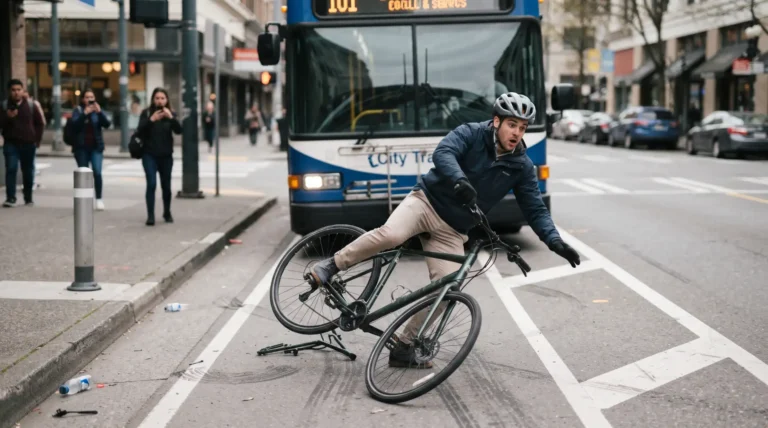
You did everything right. You rode in the bike lane, obeyed the traffic signals, and wore your helmet. Then a driver hit you — and now the insurance company is telling you it was your fault.
If this sounds familiar, you may be experiencing what legal professionals call biker bias. It is a pattern recognized across the bicycle accident legal community where insurance adjusters, and sometimes even jurors, assign blame to cyclists based on assumptions rather than facts. For injured riders, this bias can mean a drastically reduced settlement or a denied claim entirely — even when the driver was clearly negligent.
Understanding how biker bias works, why it happens, and how an experienced bicycle accident lawyer fights back can make all the difference in the outcome of your case.
What Is Biker Bias?
Biker bias refers to a tendency — conscious or unconscious — among insurance adjusters, defense attorneys, and sometimes jurors to view cyclists as risky, unpredictable, or partially responsible for accidents simply because they are on a bike. It is not a formal legal term, but it is a well-documented challenge in bicycle accident litigation.
The bias often stems from longstanding cultural assumptions: that cyclists do not belong on the road with cars, that they are inherently reckless, or that they routinely run red lights and ignore traffic laws. These stereotypes are rarely supported by the evidence in any specific case, but they color how claims are evaluated from the very first phone call to an insurance company.
Where Biker Bias Shows Up

Biker bias can appear at multiple stages of a claim:
- During the insurance investigation, Adjusters may frame their questions to suggest the cyclist caused the crash, or they may request recorded statements designed to capture admissions of partial fault.
- In fault determination, Insurers may assign a disproportionately high percentage of fault to the cyclist without objective evidence to support it.
- During settlement negotiations — Low settlement offers are often justified by inflating the cyclist’s share of the blame, reducing what the insurer is required to pay.
- In litigation — Defense attorneys may appeal to a jury’s preconceived notions about cyclists to argue that the rider was partly or wholly responsible.
Recognizing where and how bias enters the process is the first step toward fighting it effectively.
Why Insurance Companies Shift Fault onto Cyclists
Insurance companies are businesses. Their financial interest lies in minimizing the amount they pay on every claim. Biker bias gives them a convenient tool to do exactly that — by shifting a portion or all of the fault to the cyclist, they reduce their payout or eliminate it.
The Role of Comparative Fault
In many states, including California, the legal system uses a comparative negligence framework. This means that if you are found to be partially at fault for the accident, your compensation is reduced by your percentage of fault. For example, if your total damages are $80,000 but you are assigned 30% fault, you would receive $56,000 instead.
This system gives insurance companies a direct financial incentive to maximize the cyclist’s assigned fault percentage. Even a modest shift — say, from 0% to 25% — can save an insurer tens of thousands of dollars on a serious injury claim. Biker bias makes that manipulation easier because it exploits existing prejudices rather than requiring hard evidence.
Common Tactics Insurers Use Against Cyclists
Insurance adjusters are trained negotiators. When biker bias enters the picture, they may use specific tactics to undermine your claim:
- Questioning your speed or lane position — Suggesting you were riding too fast or in an unexpected location, even when you were following the law.
- Challenging helmet use — In states where helmet laws vary, an adjuster may imply that not wearing a helmet makes you partially responsible for your injuries.
- Exploiting minor traffic violations — If you rolled through a stop sign seconds before the crash, the insurer may argue this caused the accident — even if the driver’s negligence was the primary cause.
- Requesting early recorded statements — These calls happen before you have legal representation and are designed to get you to say something that can be used to reduce your settlement.
- Delaying the claim — Prolonged delays pressure injured cyclists into accepting low offers out of financial desperation.
These are not accidental missteps. They are deliberate strategies. Understanding them helps you avoid falling into common traps.
The Real Statistics Behind Cyclist Safety
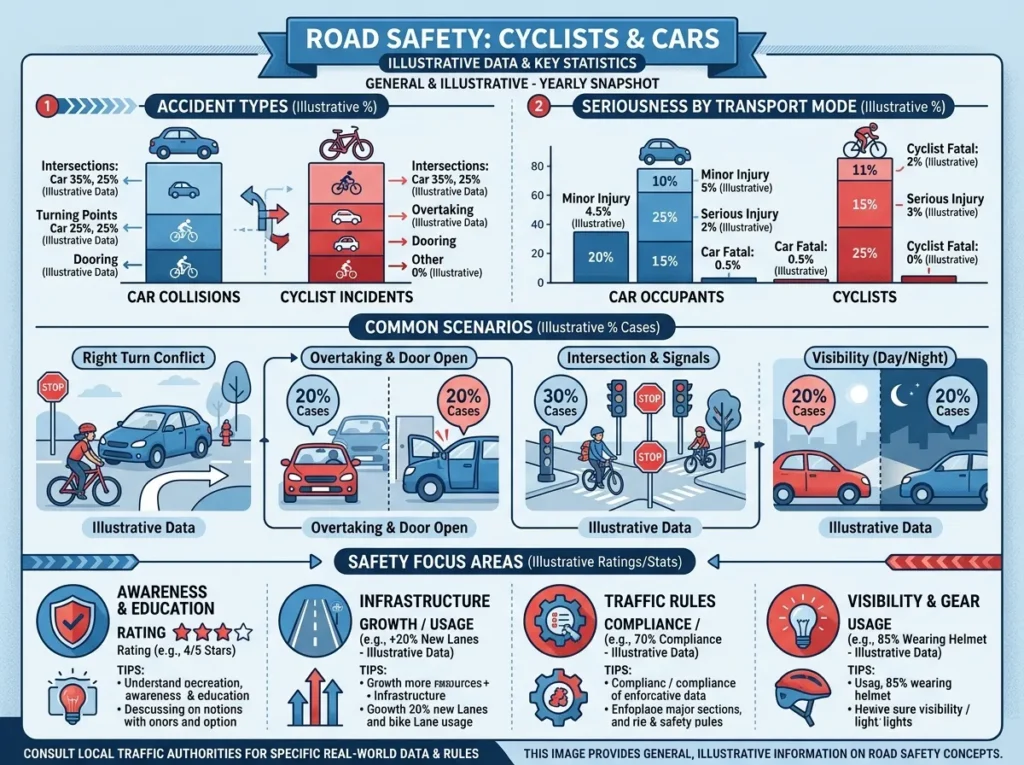
One of the most effective ways to counter biker bias is with data. The facts about cyclist behavior and road safety tell a very different story than the stereotypes suggest.
According to the National Highway Traffic Safety Administration (NHTSA), the majority of fatal bicycle crashes are caused by collisions with motor vehicles — not cyclist error. In 2021 alone, 966 cyclists were killed in traffic crashes in the United States, and a significant portion of those fatalities involved driver inattention, failure to yield, and speeding.
NHTSA data also shows that distracted driving is a growing factor in crashes involving vulnerable road users like cyclists. In 2022, 621 vulnerable road users — including cyclists — were killed in distraction-affected crashes, and fatality rates for this group have been rising despite overall traffic safety improvements.
These numbers are important in litigation because they establish that the systemic danger to cyclists comes overwhelmingly from drivers — not from reckless riding behavior. A skilled attorney uses this data to reframe the narrative when biker bias threatens your case.
How a Bicycle Accident Lawyer Fights Biker Bias
Having legal representation is the single most important step you can take when biker bias is working against your claim. An experienced bicycle accident lawyer understands how this bias operates and has specific tools to counter it.
Building an Evidence-Based Case
Biker bias thrives when cases are decided on assumptions. Evidence eliminates assumptions. A lawyer will immediately begin gathering objective proof that establishes exactly what happened and who was responsible:
- Traffic camera and dashcam footage — Video evidence is often decisive in disproving false fault assignments.
- Cell phone records — If the driver was texting or on a call at the time of the crash, these records can be subpoenaed to prove distracted driving.
- Accident reconstruction experts — Specialists in accident reconstruction analyze skid marks, impact points, vehicle speed, and road geometry to determine what actually happened.
- Witness statements — Independent witnesses who saw the crash have no reason to favor either side, making their testimony highly credible.
- Police report analysis — Lawyers scrutinize police reports for details that support the cyclist’s account, and challenge any errors or omissions.
This is consistent with how strong liability cases are built, as outlined in our guide on how to prove liability in a bicycle accident case.
Negotiating Directly with Insurance Companies
When you have legal representation, insurance companies know they cannot rely on biker bias alone to drive down your settlement. Your lawyer takes over all communications with the insurer, preventing adjusters from using recorded statements or misleading questions against you.
A lawyer who understands how bicycle accident lawyers deal with insurance companies will push back aggressively on any inflated fault assignment and present a documented counter-narrative supported by evidence. This fundamentally changes the negotiation dynamic in your favor.
Preparing for Trial When Necessary

Most bicycle accident cases settle before trial — but the credible threat of litigation is what gives your attorney leverage during negotiations. When an insurer knows your lawyer is prepared to take a case to a jury and challenge biker bias head-on with expert testimony and documented evidence, they are far more likely to offer a fair settlement rather than risk a larger verdict.
In cases that do go to trial, your attorney will also address biker bias directly during jury selection and opening statements — ensuring jurors understand that assumptions about cyclists have no place in their deliberations.
What You Should Do If You Have Been Blamed Unfairly
If an insurance company is telling you the accident was your fault — or even partially your fault — when you know it was not, take these steps immediately.
Do Not Accept a Recorded Statement
Politely decline to give a recorded statement to the at-fault driver’s insurance company until you have spoken with a lawyer. You are not legally required to provide one, and anything you say can be used to reduce your settlement.
Document Everything
Preserve all evidence from the scene: photographs, witness contact information, your damaged bicycle, medical records, and any correspondence from the insurance company. The more documentation you have, the harder it is for insurers to impose a false narrative.
Do Not Accept the First Settlement Offer
Initial offers from insurance companies almost always undervalue your claim. This is especially true when biker bias has been used to inflate your fault percentage. A lawyer can evaluate the true value of your damages — including future medical costs, lost wages, and pain and suffering — and negotiate accordingly. For a full breakdown of what you may be entitled to, see our post on what damages you can claim after a bicycle accident.
Consult a Bicycle Accident Lawyer as Soon as Possible
Statutes of limitations apply to personal injury claims, and evidence can disappear quickly — traffic camera footage is often overwritten within days. The sooner you speak with a lawyer, the better your chances of preserving the evidence you need to counter biker bias and secure fair compensation.
You Deserve a Fair Fight
Biker bias is real, it is pervasive, and it costs injured cyclists thousands of dollars in compensation they are rightfully owed. But it is not insurmountable. With the right legal representation, objective evidence, and a lawyer who knows how to challenge assumptions in and out of the courtroom, you can level the playing field against even the most aggressive insurance tactics.
You followed the rules of the road. You deserve to have your case evaluated on the facts — not on stereotypes. If an insurance company is trying to shift blame onto you after a bicycle accident, do not face them alone. Contact a qualified bicycle accident lawyer today for a free consultation and let the evidence tell your story.