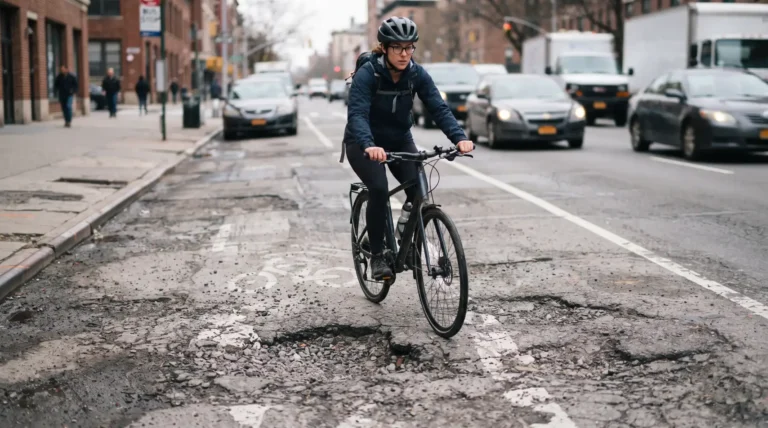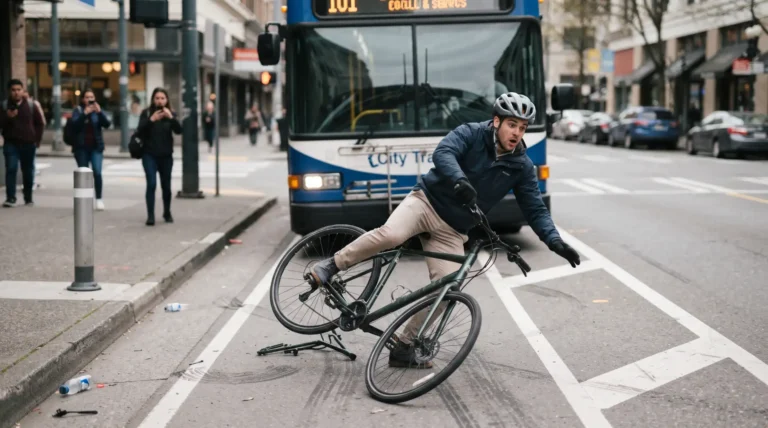
Yes, a high-speed e-bike may be treated as a motor vehicle after a crash when it falls outside the applicable legal definition of an electric bicycle. Its speed capability, motor power, pedals, modifications, design, and state classification may all matter. The classification can affect traffic violations, insurance coverage, licensing requirements, and responsibility for the collision.
Electric bicycles have changed the way many Americans commute, make deliveries, and travel short distances. A conventional e-bike may operate similarly to a traditional bicycle. Some newer models, however, can reach speeds commonly associated with mopeds and motorcycles.
The legal distinction becomes especially important after a collision. A rider may describe the vehicle as an e-bike, but the label on a product page does not necessarily control its legal classification. Police officers, insurance companies, attorneys, and courts may examine how the vehicle was built and how it operated.
A vehicle that exceeds the limits for a legally recognized e-bike may fall under rules governing mopeds, motor-driven cycles, motorcycles, or other motor vehicles. The exact result depends on the state where the crash occurred.
What Is Considered a High-Speed E-Bike?
There is no single nationwide definition of a high-speed e-bike for every traffic and accident claim. People often use the term for electric bicycles capable of traveling faster than common Class 1, Class 2, or Class 3 limits.
A high-speed model may have a powerful motor, a high-capacity battery, a throttle, or software settings that permit greater acceleration. Some products resemble bicycles because they have pedals. Others resemble lightweight motorcycles, dirt bikes, or mopeds.
The vehicle’s actual capabilities usually matter more than its marketing name. A manufacturer may call a product an electric bicycle even when it exceeds the definition established by a state.
Important characteristics may include:
- The vehicle’s maximum assisted speed
- Its maximum throttle-powered speed
- The continuous and peak motor output
- Whether it has fully operable pedals
- Whether the motor stops assisting at a required speed
- Whether the controller or software has been modified
- Whether the vehicle identification label is accurate
These details can determine which traffic, registration, licensing, and insurance laws apply after a crash.
The Federal Definition of a Low-Speed Electric Bicycle
Federal consumer product law provides one important starting point. The Consumer Product Safety Commission generally defines a low-speed electric bicycle as a two-wheeled or three-wheeled vehicle with fully operable pedals and an electric motor below 750 watts.
Under that federal definition, the vehicle’s maximum motor-powered speed must also remain below 20 mph under specified testing conditions. The rule addresses product regulation and consumer safety. It does not create one complete traffic code for every state.
Readers can review the Consumer Product Safety Commission’s bicycle requirements guidance for the federal definition and related manufacturing standards.
A vehicle outside this federal definition may face different product safety requirements. However, being outside the federal low-speed definition does not automatically settle every state traffic or civil liability issue.
States retain substantial authority over vehicle operation on public roads. They decide where e-bikes may travel and whether riders need licenses, registration, helmets, or insurance.
Understanding the Three-Class E-Bike System
Many states use a three-class framework to regulate electric bicycles. The details vary, but the typical system separates e-bikes according to motor operation and assisted speed.
Class 1 Electric Bicycles
A Class 1 e-bike generally provides assistance only while the rider pedals. The assistance normally stops when the bicycle reaches 20 mph.
Class 2 Electric Bicycles
A Class 2 e-bike usually has a throttle that can propel the bicycle without pedaling. The motor assistance generally stops at 20 mph.
Class 3 Electric Bicycles
A Class 3 e-bike typically provides pedal assistance up to 28 mph. State laws may impose additional helmet, age, equipment, or access rules for these bicycles.
The three-class system does not cover every electric two-wheeled vehicle. A model capable of powered travel above the applicable limit may no longer qualify under the state’s e-bike definition.
State rules continue to change. The National Conference of State Legislatures maintains an overview of state electric bicycle laws. Riders should also review current statutes and local ordinances where they live.
When Can an E-Bike Be Treated as a Motor Vehicle?
A high-speed e-bike may be treated as a motor vehicle when its design or operation places it outside the state’s bicycle classification. The process does not depend on one factor alone.
An investigator may examine the vehicle’s original specifications, current condition, speed settings, motor rating, pedals, throttle, and intended use. Local statutes may define the vehicle as a moped, motorized bicycle, motor-driven cycle, or motorcycle.
The following circumstances may increase the likelihood of motor vehicle treatment.
The Bike Exceeds the State Speed Limit
A vehicle may lose its e-bike status when its motor continues providing power beyond the permitted assisted speed. For example, a state may limit Class 3 assistance to 28 mph.
A vehicle capable of motor-powered travel at 35, 40, or 50 mph may fit another legal category. The result still depends on the wording of the state statute.
The Motor Exceeds the Permitted Power
Some states define electric bicycles partly through motor wattage. A powerful motor may place the vehicle outside that definition, even when the rider was traveling slowly before the crash.
Peak output and rated output can create disputes. Product listings sometimes highlight peak wattage while the motor label displays a lower nominal rating. Technical review may clarify the vehicle’s actual system.
The Vehicle Does Not Have Operable Pedals
Many legal definitions require fully operable pedals. Decorative pedals or pedals that cannot realistically propel the vehicle may not satisfy that requirement.
A vehicle without functional pedals may be treated more like a scooter, moped, or motorcycle. This issue is common with electric products designed to resemble dirt bikes or small motorcycles.
The Controller or Software Was Modified
Some e-bikes include factory speed limits that users can remove through software, controller changes, aftermarket displays, or replacement motors. These modifications may alter the vehicle’s legal status.
A bike originally sold as a compliant model may operate outside its intended class after modification. The owner, seller, repair shop, or another party may face questions about who completed the change.
The Vehicle Was Manufactured Primarily for Road Use
Federal motor vehicle analysis may also consider whether a mechanically powered vehicle was manufactured primarily for use on public streets and highways. Design, marketing, equipment, and intended operation may become relevant.
A product with motorcycle-style tires, suspension, lighting, seats, and acceleration may receive closer examination. Its classification still requires analysis under the applicable law.
Why Classification Matters After a Crash
Vehicle classification can influence several parts of an accident claim. It may affect the duties imposed on the rider, the coverage available, and the arguments made by other parties.
Traffic Rules and Rider Duties
Bicycles and motor vehicles may be subject to different operating rules. A rider operating a vehicle classified as a moped or motorcycle may need to follow licensing, registration, equipment, and roadway restrictions.
The lack of a required license or registration does not automatically prove that the rider caused the crash. It may still become part of the liability investigation.
The central question usually remains whether a violation contributed to the collision. A driver who ran a red light may still bear substantial responsibility, even when the rider’s vehicle was improperly classified.
Insurance Coverage
Insurance disputes are common after high-speed e-bike crashes. Standard auto, homeowners, renters, motorcycle, and specialty bicycle policies may define covered vehicles differently.
A homeowners policy may exclude vehicles designed for road use. An auto policy may not cover a two-wheeled vehicle owned by the insured. A motorcycle policy may require the vehicle to be listed.
Coverage can depend on the policy language, vehicle specifications, ownership, location, and manner of use. A rider should avoid assuming that one policy automatically covers every e-bike accident.
Comparative Negligence
Most states permit some form of comparative or contributory fault analysis. The effect of shared responsibility differs among jurisdictions.
An insurance company may argue that the rider traveled too fast, used an unlawful vehicle, or failed to follow moped rules. The rider may argue that the driver failed to yield, turned across a bike lane, or followed too closely.
Classification can affect the analysis, but it does not replace a detailed review of the collision. Readers can learn more through our guide to comparative negligence in bicycle accident claims.
Available Damages
Depending on state law and the facts, an injured person may pursue damages for medical expenses, lost income, damaged property, pain, and other losses.
Operating an improperly classified e-bike does not necessarily prevent a claim. However, a finding of shared fault may reduce or bar damages under the state’s rules.
Does Riding Above the Speed Limit Automatically Make the E-Bike a Motor Vehicle?
Not necessarily. The rider’s speed during one trip and the vehicle’s legal classification are related but distinct questions.
A Class 3 e-bike might travel faster than 28 mph while descending a steep hill without motor assistance. That fact alone may not transform it into a motorcycle.
Investigators may ask whether the motor continued providing assistance beyond the legal cutoff. They may also ask whether the bike was physically capable of powered travel above that limit.
The distinction can require data from the display, controller, motor, battery, smartphone application, or manufacturer. Witness descriptions and video footage may also help estimate speed.
What if the E-Bike Was Modified Before the Accident?
Modification can become one of the most important issues in a high-speed e-bike claim. Common changes include replacing the controller, installing a higher-voltage battery, changing the motor, or removing speed restrictions.
The investigation may focus on who performed the work and whether that person understood its effects. Relevant parties may include the rider, owner, retailer, repair business, component seller, or manufacturer.
A repair shop may face scrutiny if it made unsafe changes or failed to disclose known risks. A component manufacturer may face questions when a defective part caused unexpected acceleration or braking failure.
The modification may also affect warranty rights and insurance coverage. Some policies exclude losses involving racing, commercial use, unauthorized changes, or vehicles exceeding stated power limits.
The damaged e-bike should remain preserved after the crash. Repairing, discarding, resetting, or powering the bicycle on could alter important evidence.
Who May Be Liable for a High-Speed E-Bike Crash?
Liability depends on the conduct of each person or business connected to the collision. The e-bike’s classification is one part of that analysis.
A Negligent Driver
A driver may be responsible for failing to yield, speeding, making an unsafe turn, opening a door, or driving while distracted. Cyclists remain vulnerable regardless of the bicycle’s power level.
The driver cannot avoid review merely by arguing that the e-bike was fast. Investigators still need to examine the driver’s behavior and whether it contributed to the crash.
The E-Bike Rider
A rider may share responsibility for excessive speed, unsafe passing, disobeying a signal, or operating in a prohibited area. An unlawful modification may also become relevant.
Shared fault does not always eliminate the rider’s claim. The effect depends on the state’s negligence system.
The E-Bike Owner
The owner may differ from the rider. An owner who knowingly allowed another person to operate an unsafe or unlawfully modified vehicle may face a separate allegation.
Claims against owners vary significantly by state. Permission, knowledge, maintenance, and the relationship between the parties may matter.
A Manufacturer or Component Company
A manufacturer may face a product liability claim when defective brakes, tires, frames, batteries, motors, or controllers contribute to a crash. Inadequate warnings or incorrect classification labels may also become relevant.
Product claims require careful preservation of the bicycle and failed components. Technical testing may be necessary to identify the cause.
A Retailer or Repair Shop
A retailer may provide incorrect information about speed, motor power, or legal operation. A repair shop may install incompatible components or remove restrictions without adequate disclosure.
Liability depends on the service performed, available warnings, applicable state law, and whether the conduct contributed to the accident.
A Government Entity
Road defects, missing signs, unsafe lane design, or poorly maintained infrastructure may contribute to a collision. Claims against government agencies often involve special notice rules and shorter deadlines.
A person considering such a claim may need to act promptly. The required procedure differs among cities, counties, states, and federal agencies.
Evidence That May Establish the E-Bike’s Classification
A high-speed e-bike case may require more technical evidence than a conventional bicycle claim. The vehicle should remain in its post-crash condition whenever possible.
Useful evidence may include the following:
- The manufacturer, model, and serial number
- The original product specifications
- The motor and controller labels
- The bicycle’s class sticker
- The battery voltage and capacity
- Receipts for replacement parts
- Repair and modification records
- Application and account data
- Display settings and error codes
- Photos or videos from before the crash
- Helmet-camera or dashboard-camera footage
- Witness statements about speed and operation
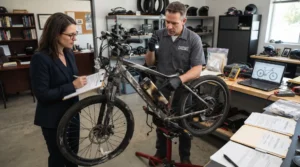
A forensic inspection may compare the physical vehicle with the manufacturer’s original configuration. Investigators may test whether the pedals function and when motor assistance stops.
The bicycle should not undergo destructive testing before all interested parties have an opportunity to inspect it. Testing protocols may need to account for battery damage and electrical hazards.
For broader documentation guidance, review how to gather evidence after a bicycle accident.
How Police Reports May Describe High-Speed E-Bikes
Police reports sometimes use broad terms such as bicycle, electric bicycle, motorized bicycle, scooter, or motorcycle. The first description may not represent a final legal determination.
An officer may not inspect the controller, motor label, or software settings at the scene. The vehicle may also be too damaged for an immediate assessment.
Photos, supplemental reports, body-camera footage, citations, and property records may provide more detail. A legal investigation may later identify a classification different from the initial report.
A person should avoid altering the bicycle merely to match the description in the report. The original post-crash condition may provide important evidence.
How Classification Can Affect a Driver’s Claim Against the Rider
High-speed e-bike collisions can also injure pedestrians, drivers, and other cyclists. A driver or pedestrian may pursue a claim against the rider when negligent operation caused the crash.
The claimant may examine whether the vehicle required registration or insurance. They may also investigate whether the rider violated age, helmet, equipment, or roadway restrictions.
Potential coverage may come from specialty e-bike insurance, homeowners insurance, renters insurance, business insurance, or another policy. Coverage depends on the contract and circumstances.
A delivery rider may introduce additional questions. A delivery platform, restaurant, courier company, or contractor may have separate insurance or responsibility.
Commercial Use and High-Speed E-Bikes
Delivery riders often prefer powerful e-bikes because they cover long distances and carry heavier loads. Commercial use can add more parties to an accident claim.
An investigation may consider whether the rider was logged into an application, carrying an order, returning from a delivery, or working under a company schedule.
The rider’s employment status may also matter. Companies often classify delivery riders as independent contractors, but legal responsibility depends on state law and the working relationship.
Commercial insurance policies may provide coverage in some situations. Personal policies may contain exclusions for delivery or business activity.
Steps to Take After a High-Speed E-Bike Accident
Safety and medical care should remain the immediate priorities. A person with possible head, neck, back, or internal injuries should avoid unnecessary movement.
Contact emergency services and report the crash. Provide accurate facts without guessing about speed, distance, technical specifications, or legal fault.
When physically able, photograph the entire scene. Include the vehicles, road markings, traffic signals, signs, debris, skid marks, and visible injuries.
Photograph the e-bike’s display, motor, battery, controller, pedals, class label, and serial number. Do not change the settings before documenting them.
Collect contact and insurance information from the other parties. Ask witnesses for their names and phone numbers.
Seek medical evaluation even when symptoms initially seem manageable. Some injuries become more noticeable after the stress response subsides.
Preserve the bicycle, battery, charger, helmet, clothing, and damaged electronic devices. Avoid repairs, software updates, factory resets, or disposal.
Keep purchase receipts, product listings, manuals, repair invoices, messages, and application records. These materials may help establish the vehicle’s original and modified condition.
For additional guidance, see our article about what to do immediately after a bicycle accident.
Common Questions About High-Speed E-Bike Classification
Is Every E-Bike That Travels Above 20 MPH a Motor Vehicle?
No. Many states recognize Class 3 e-bikes that provide pedal assistance up to 28 mph. A bicycle may also exceed 20 mph through human effort or downhill momentum.
The legal analysis often focuses on motor-assisted speed, power, equipment, and state definitions.
Does a Throttle Make an E-Bike a Motorcycle?
Not automatically. Class 2 systems commonly permit a throttle up to a specified speed. A throttle that powers the vehicle beyond legal limits may change the analysis.
Can an Unregistered High-Speed E-Bike Rider Still File a Claim?
Possibly. Lack of registration does not automatically excuse another road user’s negligence. The violation’s relationship to the collision may become a key issue.
Can a Driver’s Auto Insurance Cover the Rider’s Injuries?
Coverage may apply when an insured driver caused the crash. Policy limits, exclusions, state law, and fault still require review.
Does the Manufacturer’s Class Label Settle the Issue?
No. A label provides evidence, but investigators may compare it with the vehicle’s actual equipment and performance. Modifications or inaccurate labeling may undermine it.
What if the Rider Did Not Know the Bike Was Modified?
Lack of knowledge may affect fault arguments, but it does not necessarily determine classification. Investigators may examine who owned, sold, serviced, or modified the bike.
State Law Controls Many High-Speed E-Bike Questions
E-bike rules differ significantly across the United States. State legislatures continue to revise definitions, age requirements, helmet laws, access rules, and insurance obligations.
Local governments may also regulate bike paths, sidewalks, parks, and specific roadways. A vehicle permitted in one location may face restrictions elsewhere.
For that reason, a national definition cannot answer every crash question. The applicable state statute and local code should be reviewed alongside the vehicle’s technical specifications.
Our overview of bicycle accident laws in your state explains why location-specific rules matter after a collision.
Can High-Speed E-Bikes Be Treated as Motor Vehicles After a Crash?
A high-speed e-bike can be treated as a motor vehicle when it exceeds the applicable legal limits for an electric bicycle. Excessive motor-assisted speed, high power, missing pedals, or modifications may support another classification.
That classification may affect traffic duties, registration requirements, insurance coverage, and liability arguments. It does not automatically decide who caused the accident.
A complete investigation should examine the actions of the rider, driver, manufacturer, repair shop, owner, and any other involved party. Physical evidence and electronic data may clarify what the vehicle could do before the collision.
Because state laws and insurance policies vary, people involved in high-speed e-bike crashes may benefit from a case-specific legal review. The review can address classification, fault, available coverage, and filing deadlines.
Speak With a Bicycle Accident Lawyer
Crashes involving powerful electric bicycles can raise complex questions about vehicle classification and shared responsibility. Technical specifications, electronic data, modifications, and state laws may all shape the claim.
A bicycle accident lawyer can review the available records, preserve the e-bike, examine potential insurance coverage, and identify parties that may share responsibility.
Contact our office to discuss the circumstances of a high-speed e-bike collision and learn about the legal options that may apply.