When the Road Becomes Part of the Accident
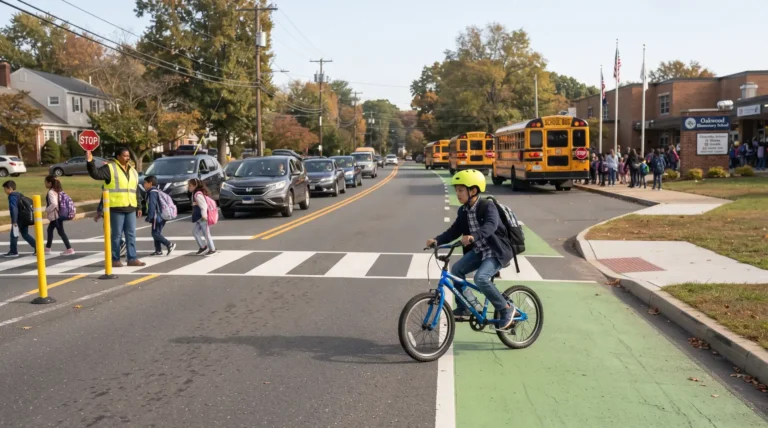
When a bicycle accident occurs, the first question is often what the driver or cyclist did immediately before the collision. A motorist may have failed to yield, turned across a bicycle lane, opened a car door into a cyclist’s path, or followed another vehicle too closely. A cyclist may have encountered a dangerous situation while traveling through an intersection, riding alongside traffic, or using a designated bicycle facility.
But sometimes the roadway itself is an important part of the story.
A poorly designed intersection can place cyclists directly in the path of turning vehicles. A bike lane may abruptly disappear at the location where traffic becomes more complicated. A drainage grate can create a dangerous surface condition. A pothole or pavement defect can cause a bicycle to suddenly lose traction or stability. A construction project can force cyclists into an unexpected traffic pattern without sufficient warning.
In these situations, an injured cyclist may have questions about more than the driver involved in the crash. The cyclist may wonder whether the city, county, state transportation agency, contractor, engineering company, or another organization contributed to the dangerous condition.
That question can be difficult to answer because government liability is governed by special rules in many jurisdictions. A public agency may have immunity for certain governmental decisions while remaining potentially responsible for particular dangerous conditions under statutory exceptions. Private contractors can also have different responsibilities depending on the work they performed, their contracts, applicable safety requirements, and the circumstances surrounding the accident.
Federal Highway Administration resources recognize roadway design, maintenance, operations, surface conditions, sight distance, bicycle accommodations, and work-zone conditions as important considerations when evaluating bicycle and pedestrian facilities. FHWA’s materials also discuss tort liability and risk management involving bicycle and pedestrian infrastructure. Federal Highway Administration bicycle and pedestrian tort-liability resources provide additional background for transportation professionals and the public.
This article explains how poor road design can contribute to bicycle accidents, when a public entity or contractor might potentially face liability, what evidence can help establish a roadway defect, and why state-specific law is essential when pursuing a claim.
What Is Poor Road Design?
Poor road design does not necessarily mean that a road was intentionally designed in an unsafe manner. In a legal case, the issue may involve a roadway configuration that created an unreasonable hazard under the circumstances, failed to account adequately for bicycle traffic, or created a dangerous interaction between bicycles and motor vehicles.
Roadway design involves many different components. Engineers and transportation agencies may consider lane widths, traffic volume, vehicle speeds, bicycle facilities, intersections, drainage, visibility, pavement conditions, traffic signals, signs, roadway curvature, grades, shoulders, access points, and the relationship between bicycles and motor vehicles.
A road can therefore create bicycle hazards without having an obvious physical defect. A bike lane that appears well maintained may still create a problem if it suddenly ends at a busy intersection. A road can have smooth pavement but inadequate sight distance. A bicycle path can be properly paved but contain an abrupt transition into a high-speed roadway.
The legal analysis depends on the specific facts. The existence of an undesirable design does not automatically establish negligence or government liability. Investigators must examine the applicable legal duty, design standards, notice, causation, government immunity, and other relevant issues.
How Poor Road Design Can Cause Bicycle Accidents
Cyclists are particularly affected by roadway conditions because bicycles have relatively narrow tires, less stability than four-wheeled vehicles, and limited protection during a crash. A roadway feature that causes only a minor inconvenience to a passenger vehicle can create a significant hazard for someone riding a bicycle.
FHWA transportation resources emphasize that bicycle facilities need to be considered as part of the overall transportation environment. Current FHWA design resources identify the 2024 AASHTO Guide for the Development of Bicycle Facilities and the 2025 NACTO Urban Bikeway Design Guide among recognized resources for bicycle facility design.
When bicycle facilities are poorly integrated with the surrounding roadway, cyclists can encounter sudden conflicts with vehicles. These conflicts may occur at intersections, driveway entrances, lane transitions, road construction areas, bridges, roundabouts, or locations where bicycle facilities disappear.
Road design can also influence how road users behave. A confusing layout can cause drivers and cyclists to make unexpected movements. A cyclist may move into a vehicle lane to avoid a pothole. A driver may cross a bike lane because the lane markings are unclear. A temporary construction barrier may push bicycles toward traffic.
When a crash occurs, investigators should examine these environmental factors instead of looking only at the final few seconds before impact.
Dangerous or Discontinuous Bike Lanes
Bike lanes are intended to provide a defined space for bicycle travel, but their safety depends heavily on how they interact with the rest of the roadway.
A bicycle lane that ends unexpectedly can create a particularly difficult situation. A cyclist traveling in a marked lane may suddenly be required to merge with moving vehicles. If the transition occurs near an intersection, the cyclist may also have to deal with turning vehicles, pedestrians, traffic signals, and other roadway users at the same time.
Another potential problem occurs when a bicycle lane places cyclists in a location where motorists are expected to turn across the lane. If the intersection design does not provide sufficiently clear guidance, drivers may fail to anticipate the presence of bicycles.
Current FHWA-recognized design resources include guidance addressing bicycle facilities and intersection treatments. These resources reflect the importance of considering bicycle movements when roadway facilities are planned and designed.
For a legal claim, however, the question is not simply whether a particular bike lane could have been designed differently. Evidence must establish whether the applicable legal requirements were violated or whether the responsible party breached a legally recognized duty.
Poorly Designed Intersections and Bicycle Crashes
Intersections are among the most complicated parts of a roadway because multiple traffic movements occur in a relatively small space. Vehicles may travel straight, turn left, turn right, merge, enter driveways, or cross bicycle facilities. Cyclists may also travel straight, turn, cross intersections, or move between bicycle lanes and general traffic lanes.
A poorly designed intersection can make these movements difficult to predict.
For example, a cyclist may approach an intersection in a marked bicycle lane while a motorist approaches from behind and intends to turn right. If the roadway configuration does not clearly communicate how the two movements should interact, a collision may occur.
Other intersection problems can include limited visibility, poorly positioned signs, inadequate pavement markings, unusual lane configurations, confusing signal timing, inadequate bicycle crossings, and obstacles that prevent drivers or cyclists from seeing one another.
FHWA materials recognize intersections as important locations for bicycle and pedestrian safety planning and describe numerous design considerations for transportation facilities.
Potholes, Cracks, and Uneven Pavement
Road surface defects are among the most straightforward examples of conditions that can cause a cyclist to lose control. A pothole can catch a bicycle wheel and cause the rider to fall. Cracks can redirect a wheel unexpectedly. Raised pavement can destabilize a bicycle, while loose gravel can reduce traction.
The location of the defect can be particularly important. A cyclist riding in a narrow bicycle lane may have little room to maneuver around a pothole. Moving into the adjacent traffic lane may expose the cyclist to a passing vehicle.
In a potential liability claim, investigators may need to determine how large the defect was, how long it existed, whether it was visible, whether it had previously been reported, whether the responsible agency had inspected the area, and whether reasonable alternatives were available to the cyclist.
FHWA’s tort-liability materials identify surface problems and poor maintenance among conditions that can create concerns involving bicycle and pedestrian facilities.
Dangerous Drainage Grates
Drainage is an essential part of roadway design because standing water can create serious problems for motorists and cyclists. However, drainage structures themselves can become hazards when they are improperly positioned or create dangerous interactions with bicycle tires.
A cyclist approaching a grate at an unfavorable angle may lose control if a bicycle wheel becomes trapped or deflected. The danger can increase when the grate is located within a narrow bicycle lane or when nearby traffic prevents the cyclist from changing position.
FHWA’s bicycle and pedestrian liability materials specifically identify drainage grates among potential roadway problems that transportation agencies should consider when evaluating risks.
A photograph showing the grate from the cyclist’s approach direction can be especially useful because it may demonstrate whether the hazard was obvious and whether the cyclist had sufficient room to avoid it.
Poor Sight Distance
Cyclists and drivers need enough visibility to identify one another and respond appropriately. Poor sight distance can be caused by roadway curves, walls, landscaping, parked vehicles, signs, barriers, structures, or other obstructions.
Suppose a bicycle path approaches a roadway at a location where vegetation or a structure blocks the driver’s view of approaching cyclists. A driver may enter the crossing without seeing the cyclist until the last moment.
Similarly, a cyclist approaching a blind curve may have insufficient time to react to a vehicle, pedestrian, debris, or another hazard.
FHWA’s transportation materials identify poor sight distance as one of the potential problems affecting bicycle and pedestrian facilities.
In a legal investigation, engineers may evaluate the visibility available to the cyclist and driver from their respective approaches. They may also examine whether the obstruction existed because of roadway design, maintenance, construction activity, landscaping, or another factor.
When Can a City Be Responsible for a Bicycle Accident?
A city may potentially face a claim when a dangerous condition falls within the circumstances for which the applicable law permits government liability. However, the mere fact that a cyclist crashed on a city street does not establish that the city is legally responsible.
Government agencies are often protected by governmental immunity laws. Those laws vary by state and can create important distinctions between different types of government conduct.
For example, one legal framework may distinguish between discretionary decisions about how a roadway should be designed and operational failures involving maintenance. Another jurisdiction may apply a different statutory test.
The precise identity of the government entity can also matter. A road may be controlled by a city, county, state transportation department, transit authority, special district, or another public entity.
Determining who owns or controls the roadway is therefore an important early step in the investigation.
Government Design Decisions and Government Maintenance Duties
One of the most important distinctions in roadway liability cases involves the difference between a design decision and a maintenance problem.
A design claim might allege that an intersection was improperly configured from the beginning or that a bicycle facility was designed in a way that created an unreasonable hazard.
A maintenance claim might involve a pothole that developed later, debris accumulating in a bike lane, a damaged sign, deteriorated pavement, overgrown vegetation, or another condition that developed after construction.
These categories can overlap. A roadway may have a design problem that becomes more dangerous because maintenance is inadequate.
The applicable state law determines whether a particular claim can proceed. In some circumstances, government immunity can make design-related claims especially complicated. Other circumstances may involve statutory exceptions for dangerous physical conditions.
Can a Contractor Be Liable for a Bicycle Accident?
Private contractors can potentially become parties to bicycle accident claims when their work creates or contributes to a dangerous roadway condition.
Construction contractors may build roads, install bicycle lanes, modify intersections, repair pavement, install drainage systems, place barriers, or perform other infrastructure work.
If the work is performed negligently and the resulting condition contributes to a cyclist’s injury, the contractor’s conduct may need to be examined.
However, being the contractor on a project does not automatically make the company liable for every accident occurring near the project. The investigation must determine what work the company performed, what duties it had, what condition existed, and whether that condition caused the injury.
Construction Zones and Temporary Bicycle Hazards
Construction areas deserve particular attention because roadway conditions can change from one day to the next.
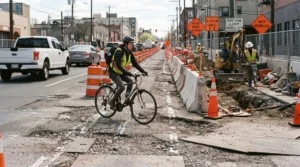
A bicycle lane may be closed temporarily. A cyclist may be directed into another lane. Pavement may be removed. Steel plates may cover portions of the road. Barriers may narrow the available space. Equipment or debris may occupy areas that cyclists normally use.
Temporary traffic-control arrangements can therefore create hazards even when the permanent roadway is reasonably safe.
FHWA has dedicated guidance concerning bicycle and pedestrian accommodation in work zones, including issues involving barriers, signage, diversions, and detours.
When a cyclist crashes in a construction area, the investigation may need to identify the general contractor, subcontractors, traffic-control company, government agency, and other organizations responsible for the project.
Who May Be Responsible for a Construction-Zone Bicycle Crash?
Several parties may have different responsibilities at a construction site.
The public agency may own or control the roadway. A general contractor may manage the construction project. A subcontractor may perform pavement or utility work. Another company may be responsible for temporary signs, cones, barriers, or traffic control.
The project documents can be important because they may identify which party was responsible for maintaining bicycle access or establishing temporary routes.
A cyclist should therefore avoid assuming that the organization shown on a construction sign is necessarily the only potentially responsible party.
Can an Engineering Company Be Involved?
Engineering companies and design professionals can sometimes become relevant when an accident involves an alleged design defect.
For example, an engineering analysis might examine whether a roadway contained inadequate sight distance, an unsafe transition, an inappropriate curve, a dangerous bicycle-lane configuration, or another design feature.
Professional negligence claims involve specialized legal and technical questions. The applicable standard can depend on the jurisdiction, the professional’s role, the project documents, and the services that were provided.
An investigation may therefore need to determine who designed the roadway, who reviewed the plans, who approved the project, who built it, and who maintained it after completion.
What Evidence Can Prove a Dangerous Road Condition?
Evidence is often one of the most important parts of a roadway-related bicycle accident case because physical conditions can change quickly.
A pothole can be filled. A damaged bike lane can be resurfaced. Construction barriers can be moved. Temporary signs can disappear. Debris can be removed. Vegetation can be cut back.
Photographs and video taken shortly after the accident can preserve evidence that may otherwise disappear.
Photographs should show both the specific defect and the larger roadway environment. A close-up image may show the depth or condition of a pothole, while a wider image can demonstrate where the pothole was located in relation to the bicycle lane and moving traffic.
It can also be useful to document traffic signs, pavement markings, traffic signals, construction barriers, drainage structures, lane transitions, intersections, nearby buildings, and other landmarks.
Your existing guide on How to Gather Evidence After a Bicycle Accident provides additional information about preserving photographs, witness information, reports, medical documentation, and other evidence that can support a bicycle accident investigation.
Why Witnesses Can Be Important
Witnesses can provide information that is not captured by photographs. A person who regularly uses the roadway may know that a pothole has existed for weeks or that cyclists frequently encounter problems at a particular intersection.
A witness who saw the accident may also explain how the cyclist encountered the roadway hazard.
Witness information can become particularly important when the physical condition is repaired shortly after the accident.
Witness statements should be documented carefully, including contact information and what the witness personally observed rather than assumptions about what happened.
Maintenance Records Can Reveal What a Government Agency Knew
Knowledge of a dangerous condition can become an important issue in some government liability claims.
A public agency may maintain inspection records, repair requests, maintenance logs, work orders, citizen complaints, emails, photographs, or other records concerning roadway conditions.
These records can potentially establish when a defect was first identified and whether action was taken before the accident.
For example, if several complaints were made about a dangerous roadway condition before a cyclist was injured, those records may become relevant to the investigation.
That does not automatically establish liability because the legal requirements for notice vary among jurisdictions. Nevertheless, determining what the responsible agency knew and when it knew it can be an important part of the case.
Previous Bicycle Crashes at the Same Location
Previous crashes can also provide useful investigative information.
If cyclists have repeatedly experienced similar accidents at the same intersection or roadway location, investigators may examine whether the pattern suggests a recurring safety problem.
Crash history does not automatically prove that a government agency or contractor was negligent. However, previous incidents may help investigators understand the roadway and determine whether similar conditions existed before the accident in question.
Transportation agencies may have crash databases, traffic studies, safety reports, or project documents that provide additional context.
Engineering Standards and Bicycle Facility Guidelines
Engineering standards can play an important role in evaluating roadway design, but they should not be treated as automatic proof of legal liability.
Roadway projects may be evaluated under federal guidance, state design manuals, local standards, professional engineering practices, project specifications, and other applicable materials.
FHWA currently identifies the 2024 AASHTO Guide for the Development of Bicycle Facilities and the 2025 NACTO Urban Bikeway Design Guide among recognized alternative roadway design publications. FHWA notes that these resources address bicycle travel, operation, planning, design, maintenance, and safety.
The relevant standard can depend on when the road was designed or reconstructed. An older facility may have been designed under standards that differ from those used for a new project.
For that reason, investigators should determine which standards were applicable when the roadway was constructed or modified.
Why Causation Matters
Showing that a dangerous condition existed is not necessarily enough to establish a successful personal injury claim.
The injured cyclist generally needs evidence connecting the condition to the accident.
For example, suppose a cyclist falls on a road that contains a pothole. If the cyclist cannot establish that the bicycle actually encountered the pothole or that the pothole caused the loss of control, another explanation for the accident may become important.
The investigation may therefore consider the bicycle’s trajectory, physical damage, witness accounts, photographs, video footage, road markings, vehicle movements, and other evidence.
In some cases, accident reconstruction or engineering experts may be useful in explaining how the roadway condition affected the cyclist.
What If a Driver and Poor Road Design Both Contributed?
Some bicycle accidents involve more than one contributing factor.
A cyclist might encounter a pothole while a vehicle is passing nearby. A poor intersection design might place a cyclist in conflict with a turning vehicle. A construction detour might force the cyclist into traffic where a motorist fails to notice the rider.
In these situations, the investigation may need to consider the conduct of the driver and the condition of the roadway together.
This is important because the presence of a roadway defect does not necessarily eliminate the responsibility of a negligent driver. Likewise, a driver’s conduct does not necessarily mean that a roadway condition is irrelevant.
The complete sequence of events should be examined.
Comparative Negligence and Bicycle Accident Claims
Another issue can arise when the defense argues that the cyclist contributed to the accident.
A driver, government agency, contractor, or insurance company might claim that the cyclist was traveling too fast, failed to pay attention, ignored a warning, or could have avoided the roadway hazard.
Whether a cyclist’s conduct affects recovery depends on the law of the state where the accident occurred. Different states use different approaches to comparative or contributory negligence.
Your site’s article on The Role of Comparative Negligence in Bicycle Accident Claims provides a useful companion discussion of how shared fault can affect bicycle accident claims.
The important point is that a cyclist’s partial responsibility does not necessarily answer the entire liability question. The applicable state law and specific facts must be considered.
Government Immunity Can Change the Case
Government immunity is one of the most important issues separating roadway claims from ordinary personal injury cases.
A private individual or business may generally be subject to ordinary negligence rules, while a public agency may receive statutory protections or immunity for certain actions.
Some jurisdictions distinguish between discretionary policy decisions and operational or maintenance responsibilities. Others create specific statutory exceptions involving dangerous conditions of public property.
Because these laws vary significantly, an injured cyclist should identify the jurisdiction before assuming that a claim against a city or county follows the same process as a claim against a private driver.
Special Deadlines for Claims Against Government Entities
Government claims can also involve special notice requirements.
In some jurisdictions, an injured person must submit a claim to the appropriate government entity before filing a lawsuit. The deadline for submitting that claim may be much shorter than the ordinary statute of limitations for a personal injury case.
Missing a required government-claim deadline can create serious problems even when the underlying accident involved a potentially dangerous roadway condition.
For this reason, anyone considering a claim involving a city, county, state agency, or other public entity should determine the applicable deadlines as soon as possible.
Why the Location of the Bicycle Accident Matters
The same type of roadway defect can produce different legal consequences in different states.
A pothole accident in California may be governed by different government-liability rules than a similar accident in Texas, New York, Florida, Washington, or Illinois.
Even within the same state, the responsible entity may differ depending on whether the road is a city street, county road, state highway, private development road, or another type of facility.
Your existing article, Understanding Bicycle Accident Laws in Your State, explains why state-specific rules are important when evaluating bicycle accident claims.
How Accident Reconstruction Can Help
Accident reconstruction can be valuable when the cause of a bicycle crash is disputed.
An expert may analyze the roadway geometry, bicycle trajectory, vehicle positions, visibility, traffic speeds, pavement conditions, bicycle-lane configuration, physical evidence, and available video.
The purpose is not simply to identify where the cyclist fell. A reconstruction may help explain how the roadway condition interacted with the cyclist and other road users.
For example, an expert might evaluate whether a cyclist had enough space to safely move around a pothole without entering the path of a nearby vehicle.
Digital Evidence Is Becoming Increasingly Important
Modern cyclists may have access to substantial digital evidence.
Helmet cameras, bicycle computers, GPS devices, smartphones, fitness applications, smartwatches, vehicle dashcams, and nearby surveillance cameras may provide information about the cyclist’s route and the conditions surrounding the crash.
A recording can potentially show the roadway before the accident, including pavement defects, lane markings, traffic patterns, construction barriers, and visibility.
Digital evidence should be preserved rather than edited or overwritten. Video systems can automatically delete older recordings, making prompt preservation particularly important.
What Happens if the Roadway Is Repaired After the Accident?
Roadway repairs do not necessarily make an accident claim impossible.
In fact, a repair may demonstrate that the physical condition changed after the accident, making earlier photographs, videos, witness statements, maintenance records, and repair records particularly valuable.
Investigators should document the condition as soon as possible when doing so can be accomplished safely.
If the road has already been repaired, the investigation may focus on reconstructing the earlier condition through available evidence.
Photographing the Roadway Correctly
A single photograph of a pothole may not provide enough information.
Useful documentation can include photographs taken from the cyclist’s direction of travel, photographs from the opposite direction, wider images showing surrounding traffic lanes, close-ups showing the defect itself, and images showing nearby signs and pavement markings.
The goal is to establish context.
For example, a close-up photograph can show a damaged drainage grate, while a wider photograph can demonstrate that the grate was positioned directly within a narrow bicycle lane next to a busy traffic lane.
That distinction can become important when evaluating whether a cyclist reasonably had an opportunity to avoid the hazard.
What Cyclists Should Do After a Roadway-Related Crash
The first priority after any accident should be safety and medical care. A cyclist should not place themselves in additional danger to photograph a roadway defect or collect evidence.
When it is safe, photographs and video should document the roadway, bicycle, vehicle damage, signs, signals, lane markings, construction equipment, and surrounding area.
Witness contact information should be preserved, and the accident should be reported to the appropriate authorities when required.
Medical treatment should also be documented. Medical records can establish the nature and extent of injuries and help connect those injuries to the accident.
Bicycle repair estimates, replacement costs, damaged clothing, helmet damage, medical expenses, transportation costs, and other financial losses should also be preserved.
Why Cyclists Should Not Immediately Assume the Driver Is the Only Responsible Party
When a motor vehicle is involved, it can be tempting to focus entirely on the driver.
But the roadway may have influenced the crash.
A cyclist may have moved into traffic because a bike lane ended unexpectedly. A driver may have been unable to see the cyclist because of an obstructed intersection. A cyclist may have lost control after hitting a pavement defect. A construction project may have created a dangerous temporary route.
These circumstances do not eliminate driver responsibility when a driver was negligent. Instead, they demonstrate why the entire accident environment should be investigated.

How a Bicycle Accident Attorney May Investigate a Roadway Claim
An attorney handling a roadway-related bicycle accident claim may begin by identifying every party connected to the roadway.
This may include the city, county, state transportation agency, contractor, subcontractor, engineering firm, property owner, or another entity.
The investigation may then focus on ownership and control of the roadway, applicable design standards, maintenance responsibilities, construction documents, previous complaints, accident history, photographs, video, witness accounts, medical records, and expert analysis.
In cases involving public entities, an attorney may also need to determine whether a government claim or other notice must be submitted before litigation can proceed.
The objective is to build a factual timeline showing what happened before, during, and after the accident.
Common Roadway Conditions That Deserve Investigation
Not every roadway problem creates legal liability, but several conditions can warrant closer examination when they contribute to a bicycle crash. These can include potholes, broken pavement, dangerous drainage grates, inadequate bicycle-lane separation, abrupt bike-lane endings, poor sight distance, confusing intersection configurations, missing warnings, defective traffic-control devices, unsafe construction detours, debris, standing water, damaged barriers, and improperly maintained bicycle paths.
The circumstances surrounding each condition matter. A minor pavement crack may have little relationship to an accident, while a large defect located directly in a cyclist’s path may be central to the crash.
Similarly, a bike lane that does not meet a preferred design recommendation is not necessarily evidence of negligence. The legal analysis requires consideration of the applicable standards, duties, circumstances, and state law.
Why Roadway Maintenance Is as Important as Initial Design
Road safety does not end when construction is completed.
Roads and bicycle facilities are exposed to weather, traffic, utility work, vegetation, debris, pavement deterioration, drainage problems, and other conditions that can change over time.
A facility that was reasonably safe when originally constructed can become hazardous later.
FHWA’s bicycle and pedestrian liability materials emphasize ongoing evaluation and maintenance of facilities and identify conditions such as debris, deteriorating pavement, standing water, and poor maintenance as issues that can create risk.
For a bicycle accident investigation, the question may therefore be not only who designed the roadway but also who was responsible for maintaining it when the crash occurred.
The Role of Public Records
Public records can sometimes provide information that is not available at the accident scene.
Depending on applicable law, records may include roadway plans, engineering drawings, inspection reports, maintenance logs, work orders, construction contracts, complaints, traffic studies, crash records, photographs, and communications concerning roadway conditions.
These records can help establish how the roadway was designed, who controlled it, whether a condition had been reported, and what actions were taken before the accident.
Public-record requests can therefore be an important investigative tool in some roadway cases.
What If the City Says the Road Met Design Standards?
A government agency or contractor may argue that the roadway complied with applicable design standards.
That evidence can be important, but it may not necessarily resolve every issue in a case. Investigators may still need to determine which standards applied, whether the actual roadway matched the approved plans, whether the condition developed after construction, whether maintenance responsibilities were fulfilled, and whether other circumstances created a dangerous condition.
Engineering standards can provide important context, but legal liability ultimately depends on the applicable law and facts.
Can Poor Road Design Cause Serious Bicycle Injuries?
A roadway defect does not need to cause a collision with a vehicle to produce serious injuries.
A cyclist who strikes a pothole can be thrown over the handlebars. A rider who loses control because of loose gravel can collide with a curb or roadside structure. A cyclist navigating an unsafe construction detour may collide with a barrier or another road user.
Injuries can include broken bones, road rash, joint injuries, spinal injuries, head injuries, internal injuries, and other trauma.
The severity of the injury can affect the financial consequences of the accident, including medical treatment, rehabilitation, lost income, future care needs, and other damages recognized under applicable state law.
Why Early Documentation Matters
Roadway conditions are temporary evidence.
A dangerous condition can be repaired before an injured cyclist has an opportunity to return to the location. A construction project can progress to another phase. A temporary sign can be removed. A pothole can be filled.
Early documentation can preserve information that might otherwise be unavailable later.
This is one reason an accident investigation should begin promptly when a roadway condition may have contributed to a bicycle crash.
Frequently Asked Questions
Can I sue a city if a pothole caused my bicycle accident?
Possibly. Government liability depends on the law of the state and the specific facts. Issues can include whether the city had a legal duty, whether it knew or should have known about the condition, whether an immunity applies, whether the condition caused the accident, and whether special notice requirements must be satisfied.
Can a contractor be sued after a bicycle accident in a construction zone?
A contractor may potentially be responsible when negligent construction work, unsafe temporary traffic control, debris, barriers, pavement conditions, or another construction-related condition contributed to a cyclist’s injury. The contractor’s exact responsibilities should be established from the project documents and applicable law.
Does a poorly designed bike lane automatically mean the city was negligent?
No. A bike lane may be inconvenient or different from current design preferences without creating legal liability. A claim requires analysis of the applicable duty, standards, roadway condition, causation, and any government immunity or other legal protections.
What evidence should I collect after a bicycle crash caused by a road defect?
When safe, preserve photographs and video of the roadway, the specific defect, nearby traffic lanes, bicycle facilities, signs, signals, construction equipment, and surrounding area. Witness information, police reports, medical records, bicycle damage, repair estimates, and digital recordings can also be important.
What if the city repaired the road after my accident?
A later repair does not necessarily prevent an investigation. Photographs, videos, witness testimony, maintenance records, repair orders, inspection records, and other evidence may help establish what the roadway looked like at the time of the crash.
Can I still have a claim if I was partly responsible for the accident?
Possibly. The effect of a cyclist’s own conduct depends on the state’s negligence rules. Some jurisdictions apply comparative negligence, while others follow different approaches. The specific circumstances and applicable law must be evaluated.
How long do I have to file a claim against a city?
There is no single nationwide deadline. Claims against government entities can involve special notice or administrative requirements that differ from ordinary personal injury deadlines. Because these deadlines can be shorter in some jurisdictions, an injured cyclist should investigate the applicable rules promptly.
Final Thoughts on Bicycle Accidents Caused by Poor Road Design
Bicycle accidents caused by poor road design can involve complex questions about roadway engineering, maintenance, construction, government responsibility, contractor duties, and state-specific liability laws.
A dangerous roadway condition does not automatically make a city, county, state agency, contractor, or engineering firm legally responsible. At the same time, an injured cyclist should not assume that the driver is necessarily the only party whose conduct or responsibilities deserve investigation.
A complete investigation can consider the entire roadway environment. The analysis may include the bicycle lane, intersection, pavement, drainage, signs, traffic signals, sight distance, construction activity, maintenance history, roadway ownership, project documents, prior complaints, previous crashes, and the actions of the cyclist and other road users.
Evidence can be especially important because roadway conditions often change after an accident. Photographs, video, witness statements, maintenance records, construction documents, engineering plans, crash reports, and digital data can help preserve the circumstances that existed when the accident occurred.
FHWA’s current roadway-design resources recognize the importance of bicycle accommodation and identify nationally recognized bicycle facility design resources, while its bicycle and pedestrian transportation materials discuss roadway maintenance, surface conditions, facility design, risk management, and liability considerations.
Because government liability laws, contractor responsibilities, negligence standards, and filing requirements vary throughout the United States, a roadway-related bicycle accident should be evaluated according to the law of the jurisdiction where the crash occurred.
If a cyclist has been injured because of a pothole, defective bicycle facility, dangerous intersection, construction hazard, poor roadway maintenance, or another infrastructure condition, preserving evidence and identifying the parties responsible for the roadway can be important steps in understanding the available legal options.
External Authority: Readers seeking additional information about bicycle facility design, roadway safety, and transportation planning can consult the Federal Highway Administration, the federal agency responsible for administering and supporting major aspects of the nation’s highway transportation system.